Is feces biohazard waste
Is Feces Biohazard Waste?
When you encounter feces outside of a toilet—whether on a floor, carpet, or outdoor surface—the question of how to handle it safely becomes urgent. Understanding whether feces qualifies as biohazard waste affects everything from cleanup methods to legal liability. This guide breaks down the science, regulations, and practical steps you need to know.
Quick Answer: Is Feces Considered Biohazard Waste?
Human feces is biologically hazardous because it can contain infectious pathogens capable of causing serious illness. However, it is not always treated as regulated medical waste under U.S. law.
The distinction matters: feces is “biohazardous by nature” due to the pathogens it carries, but it only becomes “legally regulated medical waste” under specific circumstances—most notably when visibly contaminated with blood. The OSHA Bloodborne Pathogens Standard, established in 1991, provides the framework most states follow.
Here’s what you need to know at a glance:
Yes, feces is a biohazard. Human fecal matter can transmit diseases including E. coli O157:H7, hepatitis A, norovirus, and C. difficile—all of which pose serious health risks.
No, it’s not always regulated medical waste. Under OSHA guidelines, vomit, feces, and urine are not typically classified as regulated waste unless contaminated with blood or other potentially infectious material.
Context determines handling requirements. Ordinary toilet use sends waste to wastewater treatment systems designed to handle it safely. Feces on floors, carpets, or outdoor areas may require professional biohazard cleanup depending on volume and conditions.
Visible blood changes everything. When feces contains visible blood, most jurisdictions treat it as regulated medical waste requiring special disposal procedures.
State regulations vary significantly. What applies in California may differ from Texas or New York, so always check local health department guidelines.
What Makes Feces a Biohazard?
A biohazard is any biological material capable of causing disease in humans. Human feces fits this definition because of the dense microbial load it carries—even from healthy individuals.
Typical human feces is approximately 75% water. The remaining 25% consists of solid material, including undigested food, intestinal secretions, and a thriving community of microorganisms. What makes this particularly significant from a biohazard perspective is the bacterial concentration.
25–54% of the dry weight of feces is bacteria. While many are harmless gut flora, pathogenic bacteria, viruses, and parasites can be present even when a person appears completely healthy.
Bacteria found in feces include: E. coli O157:H7, Salmonella, Shigella, Campylobacter, and C. difficile—all capable of causing severe gastrointestinal illness.
Viruses shed in feces include: norovirus (highly contagious), hepatitis A and E, and rotavirus.
Parasites present in feces include: Giardia, Cryptosporidium, and various helminths (intestinal worms).
Dried feces remains dangerous. Infectious agents can survive on surfaces for days to weeks. Sweeping or high-pressure washing can aerosolize dried fecal particles, increasing inhalation and mucous-membrane exposure risk.
The high bacterial concentration in feces—up to half of its dry weight—explains why even small amounts require careful handling.
Regulatory Status: When Is Feces Regulated Medical Waste?
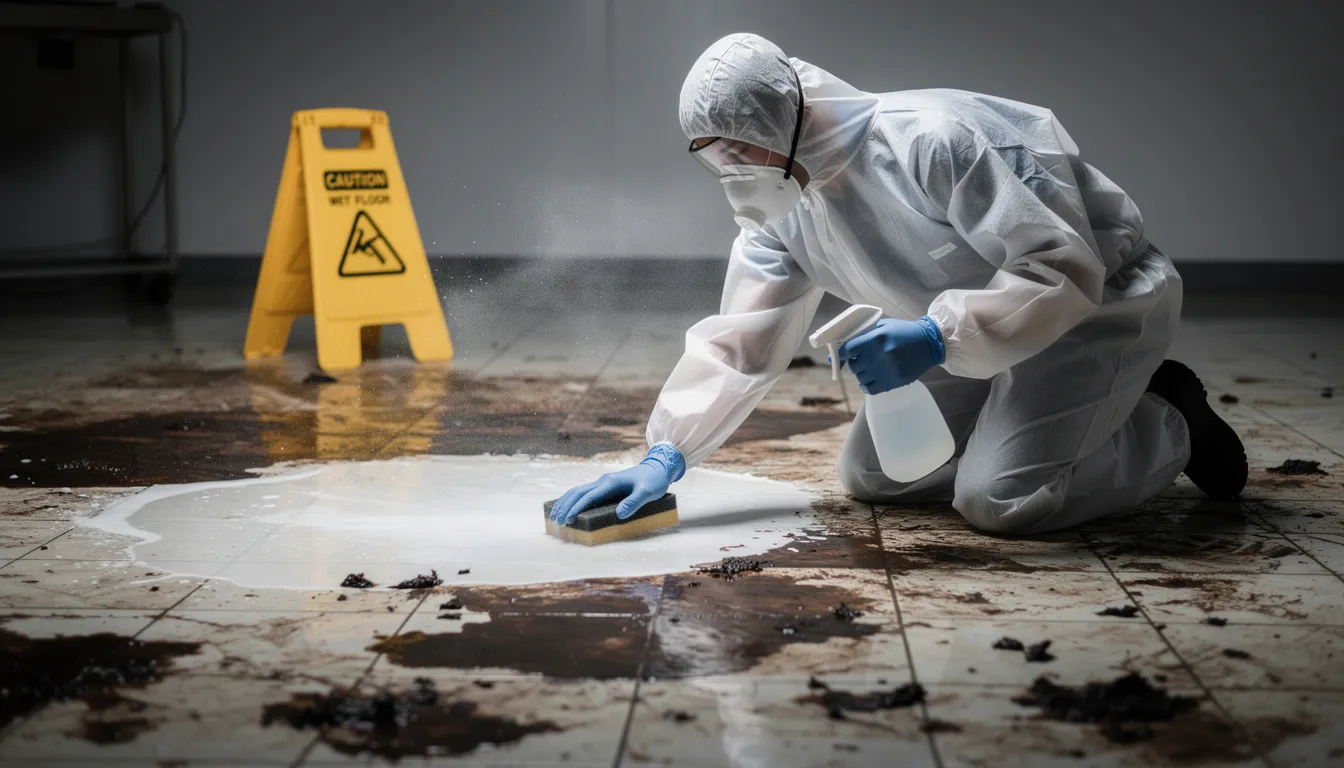
While feces is inherently biohazardous, U.S. federal and state regulations do not classify all feces as regulated medical waste. Understanding this distinction is critical for property managers, business owners, and anyone handling fecal contamination.
Small, routine incidents follow simpler rules. In most jurisdictions, human feces from routine incidents (a bathroom accident, diaper changes) without visible blood can be bagged securely and disposed of in regular trash, following local guidelines.
Visible blood triggers medical waste protocols. Feces contaminated with blood is generally treated as regulated medical waste and must be managed under rules similar to other blood-contaminated materials, per the OSHA Bloodborne Pathogens Standard.
Healthcare facilities have stricter requirements. Hospitals, nursing homes, and laboratories often maintain internal policies exceeding household standards—requiring red biohazard bag disposal, proper labeling, and contracted medical waste haulers.
Laboratory samples follow biosafety protocols. Fecal samples in clinical or research settings are handled under BSL-2 or higher protocols, including restricted access, biological safety cabinets, autoclaving, and never placement in normal trash.
State laws differ substantially. California, Texas, New York, and other states have detailed medical waste statutes with varying definitions and requirements. Property managers and businesses should always consult local health departments before assuming federal guidelines apply.
Scenario | Typical Classification | Disposal Method |
|---|---|---|
Small bathroom accident (no blood) | Not regulated medical waste | Double-bag, regular trash |
Feces with visible blood | Regulated medical waste | Red biohazard bag, licensed hauler |
Healthcare facility feces | Often treated as medical waste | Follow facility protocols |
Laboratory fecal samples | Biohazardous material | Autoclave, BSL-2+ protocols |
Sewage backup | Varies by jurisdiction | Often requires professional remediation |
Health Risks and Routes of Exposure
The primary transmission route from feces to humans is the fecal-oral route—ingesting microscopic particles that reach the mouth via contaminated hands, surfaces, or food. However, skin, eyes, and inhalation can also facilitate infection during cleanup.
Key exposure routes include:
Direct contact with contaminated surfaces, then touching face, mouth, or food
Ingestion of microscopic particles via unwashed hands
Splash exposure to eyes or mouth during cleanup
Wound contact when feces touches cuts, abrasions, or broken skin
Inhalation of dust from dried feces or aerosols from sewage
Specific illnesses linked to fecal contamination present real public health concerns:
Gastroenteritis (stomach flu) causing vomiting, diarrhea, and dehydration
Hepatitis A outbreaks documented across multiple U.S. states between 2016–2023
C. difficile infections particularly prevalent in healthcare settings
E. coli O157:H7 capable of causing hemolytic uremic syndrome and kidney failure
High-risk populations face the greatest danger from fecal exposure:
Infants and young children
Elderly individuals
Pregnant women
Immunocompromised patients (HIV/AIDS, cancer treatment, organ transplant recipients)
Those with chronic liver or kidney disease
Symptoms typically appear within 4–72 hours after exposure and may include nausea, vomiting, diarrhea, cramping, and fever. Severe complications can include dehydration requiring hospitalization, kidney failure (particularly from E. coli O157:H7), and sepsis in vulnerable individuals.
Can You Clean Up Feces Yourself, or Is a Biohazard Company Needed?
Small, contained incidents—like a toddler’s accident on a washable bathroom floor—can often be handled by a homeowner using disposable gloves and proper disinfectants. Larger or higher-risk contamination scenarios should be managed by professional cleaners with proper training and equipment.
Low-risk scenarios (often suitable for DIY cleanup):
Single small spot on hard, non-porous flooring
Fresh material that hasn’t dried or spread
No mixing with blood, vomit, or sewage
Healthy household with no immunocompromised members
High-risk scenarios (professional biohazard cleanup strongly recommended):
Homeless encampment with multiple feces deposits
Sewage backup affecting entire rooms or multiple surfaces
Hoarded or abandoned properties with accumulated waste
Nursing home or hospital contamination
Rental units trashed by occupants
Porous materials (carpet, upholstery, drywall) saturated with feces
Long-standing dried feces requiring removal
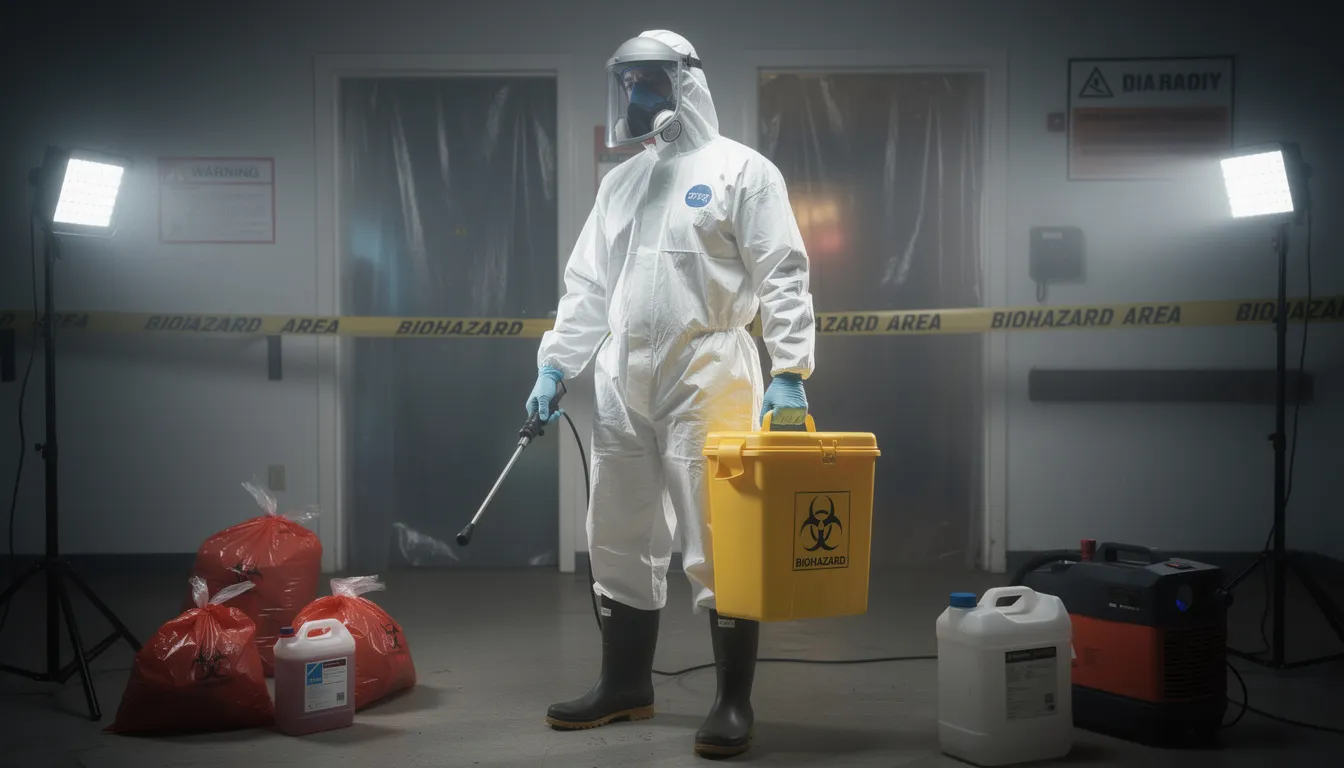
Professional biohazard remediation teams bring specific skills and resources:
Training in bloodborne pathogen standards and universal precautions
Industrial-grade personal protective equipment
Hospital-grade disinfectants effective against C. difficile spores and norovirus
Odor removal technology (ozone, hydroxyl generators, HEPA filtration)
Waste packaging compliant with local regulations
Ability to provide documentation for insurance claims
Property owners and landlords face potential legal liability if improper cleanup leads to illness. Documentation from a professional remediation company often supports insurance coverage and demonstrates due diligence.
Why Ordinary Household Cleaners Are Often Not Enough
Many everyday cleaning products are designed for general soil removal and odor control, not for reliably eliminating the full spectrum of fecal pathogens.
Understanding product categories is essential:
Cleaners remove visible dirt and debris but don’t kill pathogens
Sanitizers reduce bacterial populations but may not eliminate viruses or spores
EPA-registered disinfectants are tested and proven to kill specific organisms when used correctly
The problem with typical grocery-store products:
Many wipes and sprays have limited pathogen spectrum
Effective disinfection often requires 5–10 minutes of wet contact time—far longer than most users maintain
C. difficile spores are notoriously resistant to many common disinfectants
Norovirus requires specific EPA-registered products for inactivation
Professional biohazard teams select products designed for worst-case scenarios:
Hospital-grade disinfectants meeting EPA List K standards (effective against C. difficile)
Chlorine-based solutions at appropriate concentrations
Hydrogen peroxide formulations for broad-spectrum coverage
Products with proven efficacy against both bacteria and viruses
Odor remediation presents additional challenges. Fecal contamination often leaves persistent odors absorbed into drywall, subfloor, carpet padding, or HVAC systems. Eliminating these odors typically requires:
Specialized enzymatic deodorizers
HEPA filtration systems
Ozone or UV treatments
Sometimes removal and replacement of contaminated materials
Safe Cleanup Protocols for Small Fecal Incidents
This section covers minor, contained incidents in homes or workplaces—not sewage backups or large-scale contamination requiring professional intervention.
Before you begin:
Isolate the area immediately
Keep children and pets away from the contaminated zone
Open windows for ventilation if possible
Never sweep or vacuum dried feces—this aerosolizes particles and increases exposure risk
Recommended protective equipment:
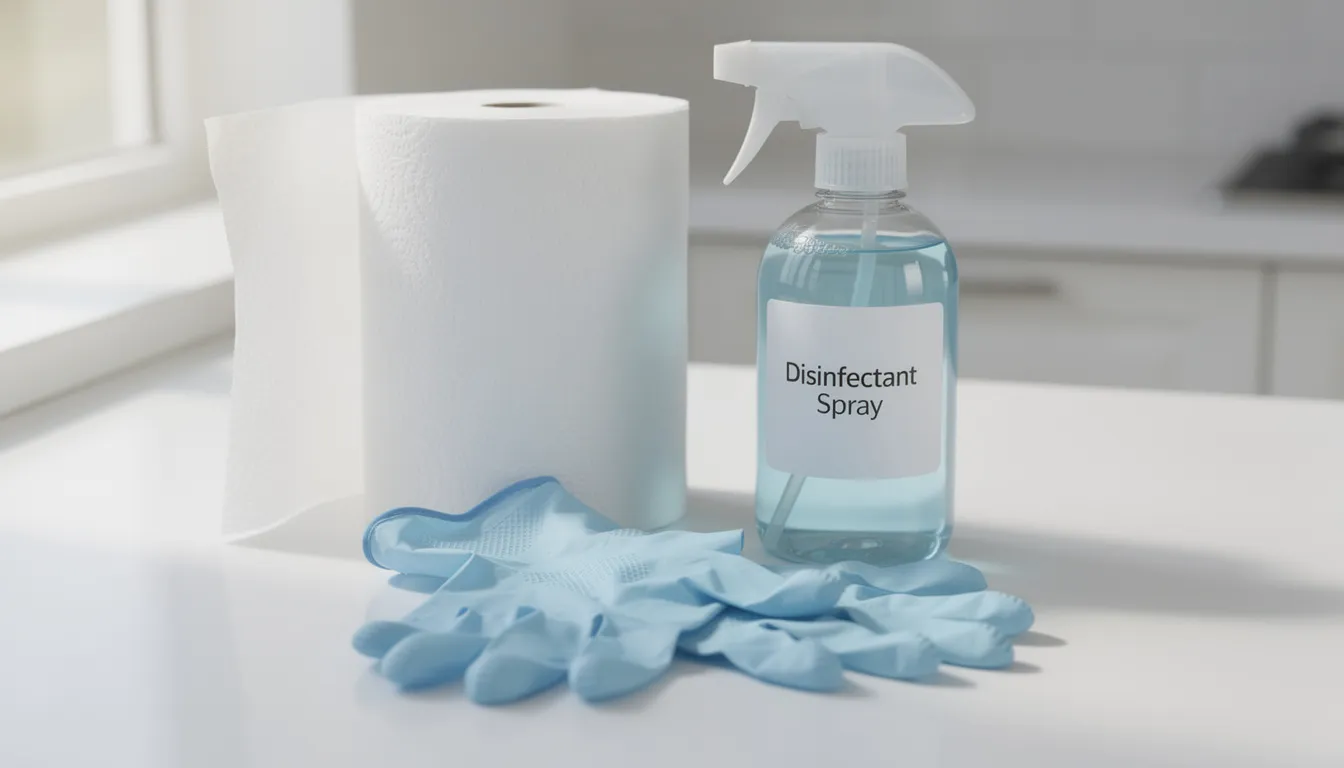
Disposable nitrile or latex gloves (double-gloving provides extra protection)
Eye protection (safety glasses or goggles) if splash risk exists
Disposable mask or N95 respirator if dried material or heavy odor is present
Disposable gown or apron for larger cleanups
Step-by-step removal process:
Gently pick up bulk material using disposable paper towels, a plastic scoop, or cardboard
Place material directly into a sturdy plastic bag
Seal the bag tightly, then double-bag before placing in household trash (unless local laws specify otherwise)
Clean visible soil from the surface using detergent and water
Apply an EPA-registered disinfectant labeled for norovirus or similar enteric pathogens
Leave disinfectant wet on surface for the full contact time stated on the label (typically 5–10 minutes)
Wipe or allow to air dry according to product instructions
After cleanup:
Remove protective gear carefully, avoiding contact with outer surfaces
Dispose of all PPE in sealed bags
Wash hands thoroughly with soap and water for at least 20 seconds
Monitor yourself for symptoms (nausea, diarrhea, fever) over the following 3–5 days
Animal Feces: Are Pet and Wildlife Droppings Biohazardous Too?
Animal feces can also qualify as bio hazardous materials because many zoonotic pathogens—diseases that pass from animals to humans—are shed in droppings.
Common pet risks:
Dog feces can carry Campylobacter bacteria and roundworm eggs (Toxocara canis)
Cat feces may contain Toxoplasma gondii, a parasite especially dangerous during pregnancy that can cause birth defects
Both dog and cat waste can harbor Salmonella and E. coli strains infectious to humans
Wildlife hazards:
Bird droppings (especially pigeons and starlings) are associated with histoplasmosis, a fungal respiratory infection
Bat guano in attics poses similar histoplasmosis risks and may require professional removal
Rodent droppings are linked to hantavirus, which can cause severe respiratory illness
When animal waste becomes a serious biohazard:
Accumulated or old feces in enclosed spaces (crawl spaces, basements, attics, sheds)
Large quantities from pest infestations
Animal carcasses and associated waste
Any situation requiring disturbance of dried droppings in confined areas
Practical pet waste guidance:
Clean up daily and bag waste securely for trash disposal
Never compost dog or cat feces for food gardens
Always wash hands after handling litter boxes, pet waste, or outdoor waste stations
Consider animal blood and feces equally hazardous when cleaning up after sick pets
Small amounts of pet waste picked up daily and bagged for regular trash are generally manageable without special precautions. Accumulated or dried waste in enclosed spaces may require respiratory protection and, in severe cases, professional animal waste remediation.
When to Seek Medical Attention After Fecal Exposure
Most minor exposures that are promptly addressed with thorough handwashing do not result in illness. However, certain situations warrant immediate medical evaluation.
Seek medical attention immediately if:
You ingested any amount of fecal material
Feces splashed into your eyes or mouth
Feces contacted open wounds, cuts, or abrasions
You had extensive skin contact with sewage or visibly contaminated floodwater
You experienced submersion in contaminated water
Watch for symptoms and contact a healthcare provider if:
Gastrointestinal symptoms (vomiting, diarrhea, cramping, fever) appear within 4–72 hours after exposure
Symptoms persist beyond 48 hours or worsen significantly
You notice blood in stool or vomit
Signs of dehydration develop (dark urine, dizziness, rapid heartbeat)
High-risk individuals should contact a clinician even for minor exposures:
Pregnant women
Immunocompromised patients
Organ transplant recipients
Cancer patients undergoing chemotherapy
Infants and very young children
Frail elderly individuals
Healthcare providers may recommend:
Stool testing to identify specific pathogens
Blood work to assess organ function
Hepatitis A vaccination if not previously immunized
Prophylactic treatment depending on exposure type
Monitoring protocols for illness resulting from various diseases
Key Takeaways: Is Feces Biohazard Waste?
Human feces is unquestionably a biohazard in terms of disease transmission risk, containing bacteria, viruses, and parasites capable of causing serious—even fatal—illness. However, the regulatory classification is more nuanced than many people realize.
Feces is inherently biohazardous due to the pathogens it can carry, including hepatitis B, E. coli, norovirus, and C. difficile.
Regulated medical waste classification is triggered only in specific circumstances: visible blood contamination, healthcare settings, laboratory samples, or pathological waste situations.
Improper cleanup creates liability. Property owners, landlords, and businesses may be held legally liable if inadequate remediation leads to illness—particularly in rental properties, commercial spaces, and facilities open to the public.
Small incidents can often be managed safely by following strict hygiene protocols, using proper protective equipment, and applying EPA-registered disinfectants correctly.
Large, complex, or repeated contamination should be handled by trained biohazard cleanup professionals who can ensure thorough decontamination and provide documentation.
Always verify local regulations. Contact your local health department or environmental agency for specific rules on biohazard waste disposal and hazardous waste handling in your city or state.
Whether you’re dealing with a minor bathroom accident or evaluating a property with serious contamination, treating feces as bio hazardous waste—and taking proper precautions accordingly—protects human health and reduces your risk of illness, liability, and costly remediation failures. When in doubt, consulting a professional biohazard remediation company is the safest path forward.


Latest news