
How to stop hoarding: Practical steps to take Your Home

How To Stop Hoarding: Practical Steps To Take Back Your Home
Answering Your Biggest Question: How Do I Stop Hoarding Today?
If you’re reading this, you’ve already taken the hardest step: acknowledging that hoarding has become a problem in your life. The shame you might feel right now, the fear of where to even begin, the sense of being completely buried—these feelings are valid, and you’re not alone. Hoarding disorder affects 2-4% of the general population, and the question of how to stop hoarding doesn’t have a simple answer, but it does have a starting point.
Stopping hoarding begins with two immediate actions you can take right now:
Stop bringing new items in. This is your first line of defense. No more purchases, no more “free” items from curbs, no more accepting hand-me-downs.
Make one small, specific safety improvement today. Clear a 3-foot path from your front door to your hallway. That’s it. Just that one path.
Here are concrete steps you can take in the next 24 hours:
Cancel any pending online shopping carts and remove saved payment methods from shopping sites
Unsubscribe from marketing emails and deal newsletters that trigger the urge to acquire
Choose one bag of obvious trash—expired food, broken items missing parts, junk mail from years ago—and remove it from your home immediately
Open one window or door to air out your space if it’s safe to do so
It’s important to understand that hoarding is often tied to mental health and trauma. This isn’t about willpower or being lazy. The belief that “I may need this someday” is a cognitive pattern, not a character flaw. Stopping hoarding is a long-term process, not a one-day purge. Slow, consistent progress with baby steps is safer and more sustainable than marathon cleaning sessions that leave you emotionally devastated.
Professional help can make this process less overwhelming and more emotionally manageable. A therapist who understands compulsive hoarding combined with specialists like T.A.C.T. North Atlanta can provide the structure and support you need to reclaim your home.
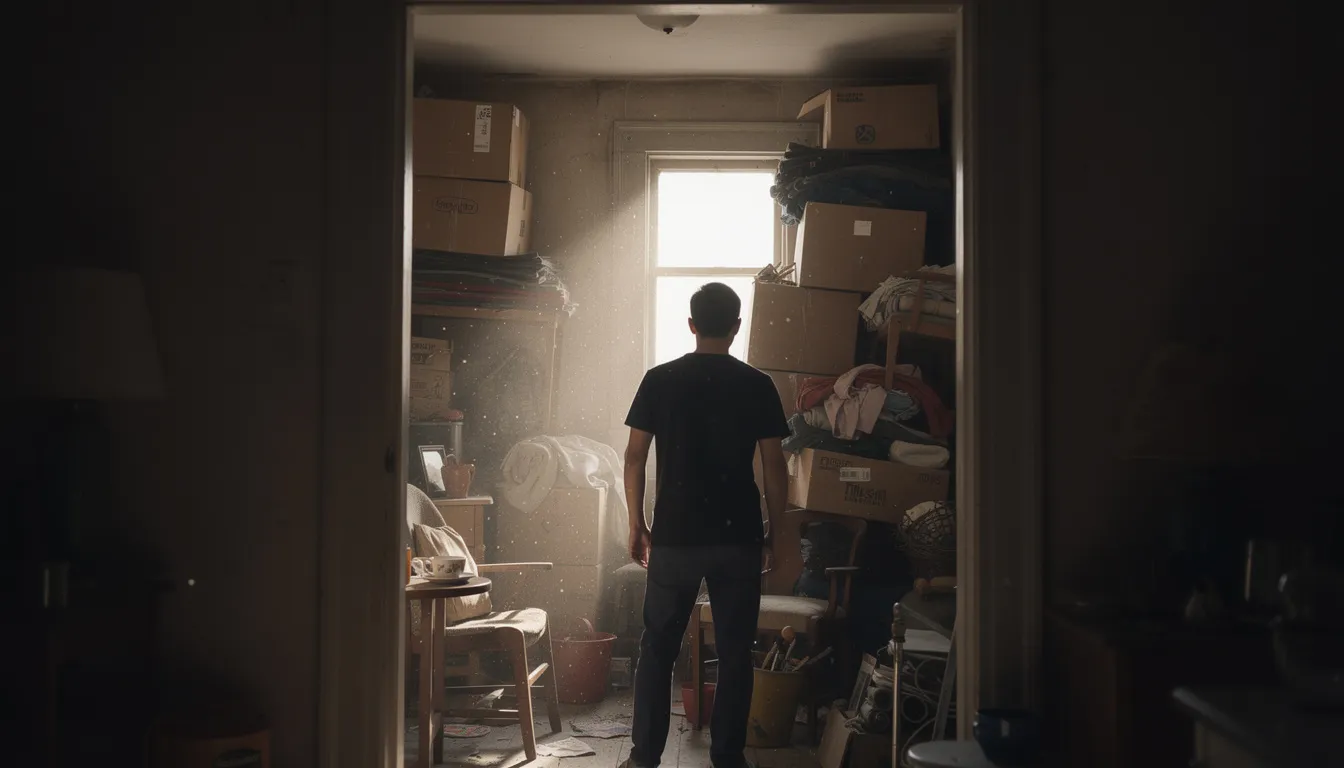
Understanding Hoarding: Why It Happens And Why It’s So Hard To Stop
Before you can effectively tackle hoarding problems, you need a better understanding of what’s actually happening in your mind and your home. Hoarding isn’t laziness, and it isn’t simply being messy. It’s a complex condition that deserves the same compassion and treatment approach as any other mental illness.
What hoarding disorder actually means:
Hoarding disorder is characterized by persistent difficulty discarding possessions, excessive saving, and clutter that blocks the normal use of living spaces. Think beds that haven’t been slept in since 2015 because they’re covered in stuff, kitchen counters buried under newspapers from 2010-2020, or bathrooms where the tub serves as storage instead of a place to bathe. The person hoarding experiences genuine distress at the thought of parting with items, regardless of their actual value.
Common roots of hoarding behavior:
Grief and loss: Many people begin hoarding after a death, divorce, or job loss. Someone who received a foreclosure notice might start keeping every piece of mail “just in case.”
Anxiety and fear: The “what if I need this someday” thinking pattern drives much of the accumulation
Trauma histories: Childhood deprivation, neglect, or having belongings forcibly removed can create a fear-driven attachment to items as protection against future scarcity
Co-occurring conditions: Depression, OCD, and other mental health problems frequently accompany hoarding
Hoarding vs. collecting—a big difference:
Collectors keep items organized and displayed with purpose. Someone with baseball cards from 1990-2024 can show you exactly where each one is, sorted by year and team. A person with hoarding disorder has chaotic piles where they can’t find or safely access things. The items bring distress rather than joy.
Hoarding often begins in adolescence—ages 12-15—with cluttered bedrooms that parents might dismiss as typical teen behavior. Without intervention, it tends to worsen decade by decade, especially after stressful life events. Unlike OCD, which often shows a waxing-and-waning pattern, hoarding is progressive.
Even digital hoarding exists: tens of thousands of unread emails, screenshots, and downloads that follow the same “just in case” mindset as physical stuff.
Understanding the “why” behind hoarding reduces shame and helps you choose more effective strategies. You’re not broken—your brain is trying to protect you in ways that no longer serve you.
First Priority: Making Your Home Safer Before You Declutter Everything
Before you decide what to keep or what has sentimental value, you need to address the immediate dangers in your living space. Fire risks, fall hazards, mold, rodent droppings, and blocked exits are the most urgent problems. Safety comes first—everything else comes second.
Critical safety checks to complete now:
Safety Issue | What to Check |
|---|---|
Exit paths | At least 3 feet wide from every bedroom to front and back doors |
Door clearance | All doors can fully open to 90 degrees |
Fire hazards | At least 2 feet of clear space around stove, water heater, and space heaters |
Smoke detectors | At least one is accessible and has working batteries |
Fire extinguisher | One is reachable and not expired |
Common hazards to look for:
Stacks of newspapers or cardboard boxes near space heaters
Extension cords buried under piles where you can’t check for damage
Old food rotting in layers of grocery bags from years past
Pet waste in corners or hidden areas
Black or green mold around old water damage that was never addressed
A “safety-only” session:
Spend 20-30 minutes focusing only on removing trip hazards from main walkways, bagging visible trash, and making sure you can reach at least one working smoke detector and one fire extinguisher. You don’t have to make any hard decisions about sentimental items yet. This is about obvious trash and hazards, not treasured belongings.
For basic fire risk advice, your local fire department can be a resource. When there’s visible biohazard material—rodent droppings, human or pet waste, mold, or severe odor—contact T.A.C.T. North Atlanta for professional assessment. Some situations require specialized equipment and training to handle safely.
Taking “before” photos for your own personal use (not for sharing) can show progress over time and provide motivation when the work feels endless.
Step-By-Step: How To Start Decluttering When You Feel Overwhelmed
When you’re surrounded by years of accumulation, the question “where do I start?” can feel completely paralyzing. Most people feel overwhelmed before they even begin, and that paralysis keeps the clutter in control. The secret is starting so small that it feels almost silly.
Start with the smallest, least emotional area:
Don’t begin with the garage full of your late mother’s belongings. Don’t start with the room where everything has sentimental meaning. Choose:
One kitchen drawer
The top of a nightstand
A 2-foot square by the bedroom door
One shelf in a closet
This is about getting the ball rolling, not completing a marathon.
Use a simple 3-box method for each session:
Box | What Goes In | Examples |
|---|---|---|
Keep and Use Now | Items you actively use and have a home for | Current medications, working phone charger |
Donate/Sell | Usable items you no longer need | Clothes not worn since winter 2018, books you’ve read |
Trash/Recycle | Broken, expired, or truly worthless items | Expired coupons from 2017, broken electronics missing parts since 2013 |
Set a timer for 10-20 minutes:
Decision-making is exhausting, especially when you have difficulty letting go. Long decluttering sessions often backfire because mental fatigue leads to keeping everything “just to be done.” Short sessions with breaks in between are more sustainable.
Create a “marinating box” for truly undecided items:
Some things genuinely need time to decide about. Put these in a box with a dated label: “Decide by October 15, 2026.” The rule is simple: once the box is full, something must leave before anything new goes in.
Remove items immediately:
At the end of each session, take trash to outside bins and donations to your car for drop-off. Don’t let bags of “leaving” items sit inside where you might open them and second-guess yourself. The longer they stay, the harder they are to let go.
For homes with significant accumulation, T.A.C.T. North Atlanta offers structured, non-judgmental hoarding cleanup plans. This includes help with sorting, bagging, and safely removing contaminated or heavy items—practical tasks that can be overwhelming to handle alone.
Staying Motivated And Coping With Difficult Feelings
Here’s what nobody tells you about decluttering a hoarded home: the emotional pain often gets worse before it gets better. As clutter starts to leave, feelings of shame, grief, anger, and fear can intensify. This is normal, and you’re not doing something wrong.
Understanding “grief for things”:
Throwing away a broken mug from 2010 can feel like losing a person. Discarding your child’s school papers from 2005 can feel like erasing part of your life. These feelings are real. Crying during a decluttering session doesn’t mean you should stop—it means you’re processing something important. Give yourself permission to take breaks when you need them.
Set small goals and celebrate them:
Instead of “I will clean out the entire house,” try:
“I will clear and keep clear this one kitchen chair by April 1, 2026”
“I will maintain a path from the bed to the bathroom for one full week”
“I will throw away 10 pieces of junk mail today”
Reward progress with non-item treats: a walk in a favorite park, a movie you’ve wanted to watch, a meal with a friend. Never reward yourself with more stuff.
Sources of motivation:
Educational videos about hoarding psychology that help you recognize your patterns
Peer stories in online forums where others describe their journey
Journaling about how it feels to walk through a cleared hallway for the first time since 2020
Before and after photos of small areas you’ve completed
Quick coping tools for difficult moments:
Deep breathing before each session (4 counts in, hold for 4, 4 counts out)
A simple mantra: “Space is more valuable than this object” or “I am choosing safety today”
Permission to pause when overwhelmed—putting something down and returning tomorrow is not failure
Calling a friend or support person when emotions spike
Involve trusted supporters:
A friend who will sit and talk while you sort (not someone who criticizes or takes over)
Support groups, either online or local, for people working on hoarding
A therapist who understands hoarding and trauma
Professional cleanup teams like T.A.C.T. North Atlanta work at the pace clients can emotionally tolerate, with respect for privacy and personal decisions. This can significantly reduce the panic and guilt that make hoarding cleanup feel impossible.

Getting Help: When To Involve Professionals (Therapists & Cleanup Specialists)
Self-help strategies are important, but many people need professional support to stop hoarding safely and permanently. There’s no shame in this—hoarding disorder is a recognized mental health condition that responds to treatment.
When to consider mental health support:
Hoarding that started or worsened after trauma (a death, divorce, or job loss)
Panic attacks at the thought of discarding items
Clutter that prevents basic self-care like bathing, cooking, or sleeping in your bed
Depression or severe anxiety that makes any action feel impossible
Thoughts of self-harm or feeling like life isn’t worth living
What treatment looks like:
A mental health professional specializing in hoarding typically uses cognitive behavioral therapy (CBT) adapted for hoarding. This involves:
Learning to challenge thoughts like “I might need this someday” or “throwing this away will cause something bad to happen”
Practicing discarding items during therapy sessions in a supported environment
Doing gradual, therapist-guided decluttering homework between appointments
Building skills for organization, categorization, and decision-making
Research shows CBT for hoarding can achieve 20-40% symptom reduction, though treatment typically takes 1-2 years. Some people also benefit from medications like SSRIs, prescribed by a doctor or psychiatrist, especially when hoarding overlaps with depression or OCD.
When to call a specialized cleanup company:
Visible rodent droppings or evidence of nests
Animal waste that hasn’t been cleaned for extended periods
Strong odors that indicate decay or contamination
Visible mold from past water damage
Rooms that haven’t been accessed or cleaned in years
Structural damage hidden under piles
What T.A.C.T. North Atlanta specifically offers:
Discreet, 24/7 hoarding cleanup services
Removal of contaminated and biohazardous materials
Odor removal and mold remediation
Rodent droppings cleanup
Full restoration to make homes safe and livable
Coordination with insurance companies when coverage applies
Reputable hoarding cleanup companies do not simply arrive with a dumpster and throw everything away. They follow agreed-upon plans, respect items you want to save, and often coordinate with therapists and family members to ensure the process supports recovery rather than worsening trauma.
If you’re in the North Atlanta area and feel embarrassed or afraid of judgment, know that T.A.C.T. North Atlanta has seen it all—and their job is to help, not to judge. A confidential consultation is just a phone call away.
Supporting Someone Else Who Hoards Without Enabling
If you’re a spouse, adult child, landlord, or caregiver for someone who hoards, you know how painful and frustrating it can be to watch someone you care about live in unsafe conditions. Wanting to help is natural. But helping the wrong way can actually make things worse.
What enabling looks like:
Buying more storage tubs to “organize” the stuff (which just allows more accumulation)
Paying for off-site storage since 2018 without addressing why items keep piling up
Secretly cleaning when the person is away, which damages trust and often triggers more intense hoarding afterward
Making excuses to others about why they can’t visit
Regularly paying fines or fees resulting from the hoarding
How to talk about it:
Use “I” statements focused on safety and your feelings, not blame or criticism:
✓ “I’m scared you won’t be able to get out in a fire”
✓ “I feel worried when I see the pathway blocked”
✓ “I want to understand what makes it hard to let things go”
✗ “This is disgusting. How can you live like this?”
✗ “You need to throw all this stuff away”
Setting boundaries that help:
You have the right to set clear, respectful boundaries:
No new items can be stored in shared living areas
Pathways to doors and bathrooms must stay clear at all times
No stacking items above a certain height in common spaces
Regular check-ins about safety conditions
Ways to support without taking over:
Help sort one small area with explicit permission
Listen to the stories behind items without rushing
Celebrate each bag of donations or trash removed
Offer to drive donations to drop-off locations
Recognize that progress may be measured in months, not days
What to avoid:
Never organize a sudden, large-scale cleanout without consent unless there is immediate, life-threatening danger. Research shows that forced cleanouts without therapy often worsen hoarding behavior afterward, damage family relationships, and can even trigger violence or extreme distress. The person needs to be part of the solution.
When family member relationships are strained or biohazards are present, involving professionals can reduce conflict. A therapist experienced with hoarding can mediate family discussions, and T.A.C.T. North Atlanta can handle the physical cleanup with discretion and compassion.
Take care of yourself too:
Supporting someone who hoards is hard work. Take breaks during helping sessions. Have your own support network—friends, a therapist, or a support group for family members. Be realistic about what you can control. You cannot want recovery more than they do.
When Hoarding Becomes A Biohazard: Specialized Cleanup And Restoration
Long-term hoarding can create serious health hazards that go far beyond what standard house cleaning can address. When a home reaches this point, it’s not about willpower or motivation anymore—it’s about safety and health, and it requires specialized intervention.
Examples of biohazard conditions:
Piles soaked with pet urine over months or years
Rodent nests and droppings in kitchen cabinets, pantries, or bedroom corners
Spoiled food layered behind grocery bags from past years
Visible mold growth on walls, ceilings, or furniture
Insect infestations in food areas or throughout the home
Human waste in containers when bathrooms became inaccessible
Dead animals that went unnoticed under clutter
Health risks these conditions create:
Hazard | Health Risk |
|---|---|
Mold spores | Respiratory issues, allergic reactions, lung infections |
Rodent droppings | Hantavirus, salmonella, other bacterial infections |
Decaying organic matter | Bacterial growth, severe odors, pest attraction |
Unstable piles | Fall injuries, crushing hazards |
Blocked exits | Inability for EMS or fire services to reach you in emergencies |
How T.A.C.T. North Atlanta approaches biohazard hoarding cleanup:
Initial assessment to understand the scope and develop a safe plan
Proper safety gear including respirators, protective suits, and gloves
Systematic removal of contaminated materials following biohazard protocols
Deep cleaning of all affected surfaces
Professional odor removal to address embedded smells
Mold remediation when fungal growth is present
Coordination with repair contractors if structural damage exists
T.A.C.T. North Atlanta is licensed, insured, and specifically trained in biohazard remediation. When damage results from covered events—like water damage from a burst pipe leading to mold growth—they can work directly with insurance companies to manage claims.
What makes professional cleanup different:
Unmarked vehicles when discretion matters
Respectful staff who understand the emotional weight of the situation
Focus on preserving dignity while restoring safety
No judgment, just solutions
If you’re in the North Atlanta region and your home has reached this point, reaching out early—before structural damage worsens or code enforcement becomes involved—can make a challenging situation more manageable. T.A.C.T. North Atlanta offers confidential consultations to assess your situation and discuss options.

Creating Long-Term Habits So The Hoard Doesn’t Return
Completing a cleanup is a major achievement, but “stopping hoarding” isn’t just one cleanup—it’s building new daily and weekly habits that prevent clutter from taking control again. Without these systems, statistics show that 70-80% of people experience significant symptoms returning after treatment. The goal is to be in the 20-30% who maintain their progress.
Intake rules that prevent new accumulation:
One in, one out: For every new item that comes into your home, at least one item must leave
The 24-hour rule: Delay non-essential purchases by at least 24 hours. Ask yourself: “Where will this live?” and “What will I let go to make room?”
No free stuff: Just because something is free doesn’t mean it’s free of cost. It costs you space, mental energy, and potentially your safety
Unsubscribe ruthlessly: Remove yourself from marketing emails, catalogs, and deal notifications that trigger acquisition urges
Weekly reset rituals:
Sunday night 15-minute tidy: Focus on key surfaces—kitchen table, one chair, bathroom counter
Quick trash scan: Go through mail and packaging before it accumulates
“Launching pad” check: Keep the area by your front door clear of piles
Visual boundaries that create structure:
Only one bookshelf for magazines—when it’s full, something leaves before anything new arrives
Only one closed bin for sentimental cards and letters
Only one plastic tote per child for school papers from their entire K-12 years
One designated spot for incoming mail, emptied weekly
Ongoing support for long-term success:
Monthly check-ins with a therapist, even when things feel under control
Periodic attendance at support groups, especially during stressful seasons
Professional cleaning help after triggering events like holidays, moves, or losses that can cause backsliding
A certified professional organizer for help with home office organizing or chronic disorganization
T.A.C.T. North Atlanta can partner on follow-up cleanings or periodic check-ins for homes that have experienced severe hoarding in the past, helping maintain safe conditions over time and catching problems before they escalate.
Reducing hoarding is a long journey measured in small steps, not giant leaps. Every clear path represents safety. Every accessible room represents freedom. Every surface you can see again represents real progress toward the life you deserve.
You don’t have to figure this out alone. Whether you need a therapist to address the mental health roots of hoarding, a certified professional organizer to create sustainable systems, or T.A.C.T. North Atlanta to handle the physical cleanup when your home has become unsafe—resources exist to support you.
The world inside your home doesn’t have to stay the way it is today. One small step, one bag of trash, one cleared chair at a time—you can take back your space, your safety, and your life.
Ready to take the next step? If you’re in the North Atlanta area and dealing with a hoarding situation that feels beyond what you can manage alone, contact T.A.C.T. North Atlanta for a confidential, judgment-free consultation. Whether the situation involves biohazards, mold, odors, or simply overwhelming volume, their team is trained to help with compassion and discretion.


Latest news